Environment Desk
Space Weather and Earth Observation
Weather
Coverage of space weather, atmospheric conditions, Earth-observation signals, and other environmental updates with operational relevance.

Research•May 21, 2026
On May 21, ground controllers powered down NASA’s AWE (Atmospheric Waves Experiment) instrument, bringing the data collection phase of the mission to a successful and scheduled end, surpassing its planned two-year mission. Installed on the exterior of the International Space Station since November 2023, AWE studied atmospheric gravity waves, which are giant ripples in the […]
NASA
Space Community•May 18, 2026
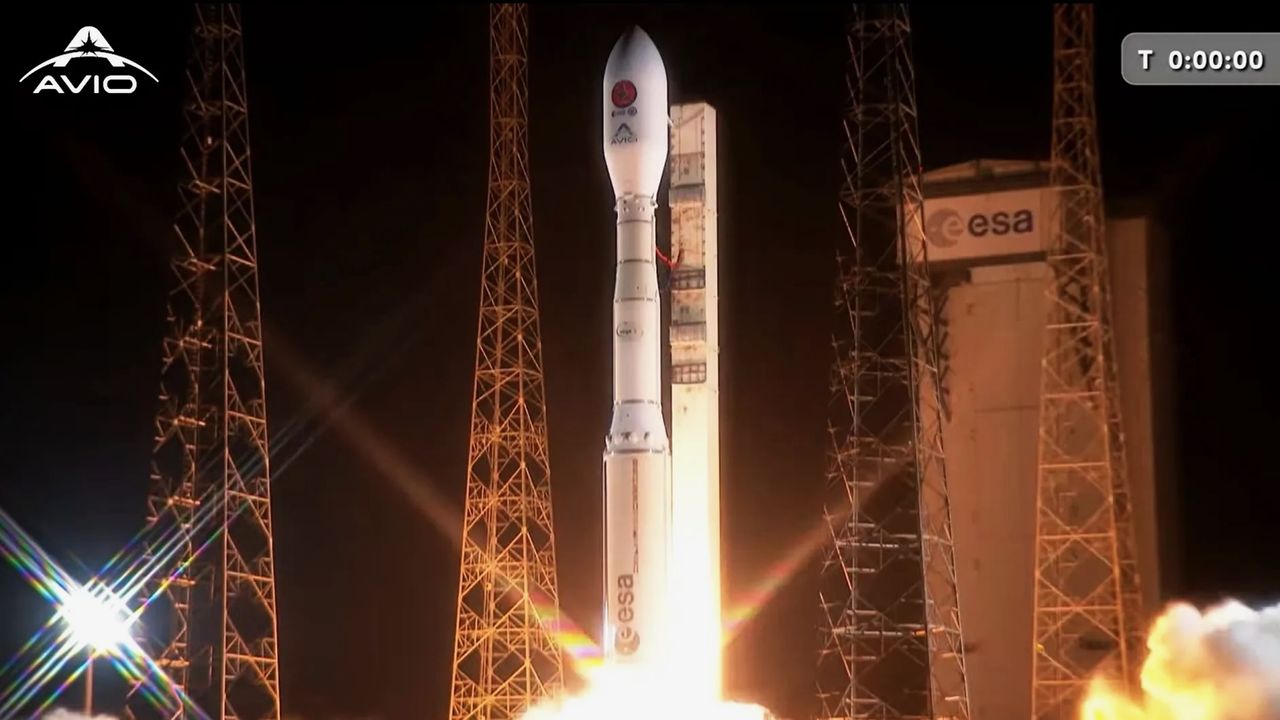
A Vega C rocket launched the European-Chinese SMILE space weather mission to orbit on Monday night (May 18).
Space.com

Business•Apr 16, 2026
BOULDER, Colorado – The sun’s volatile outbursts, such as storms, flares and other space weather, can cause serious harm to astronauts like the Artemis 2 crew who recently came home, and to satellites. That’s why the Space Weather Prediction Center (SWPC) in Boulder, Colorado — part of the National Oceanic and Atmospheric Administration — is […] The post How space weather forecasting keeps astronauts (and satellites) safe appeared first on SpaceNews.
SpaceNews

Military & Defense•Jun 2, 2026
Satellite Earth Observation (EO) is increasingly recognized as a strategic instrument for meeting Europe’s defense needs and for ensuring the green and digital transitions. From monitoring droughts and forest fires […] The post The Earth Observation Market and Regulation: Instruments for Growth appeared first on Via Satellite.
Via Satellite

Research•Apr 16, 2026
Webinar on MTG weather from space: a game changer for Africa Craig MacDonald Thu, 16/04/2026 - 13:35 Webinar on MTG weather from space: a game changer for Africa Online event, 12 May 2026 Explore how cutting-edge Meteosat Third Generation data help monitor storms, protect communities and support vital sectors The Meteosat Third Generation (MTG) satellites provide observations over the entire African continent on a continuous and frequent basis and will continue to do so for the next two decades.
EUMETSAT

Government•Apr 13, 2026
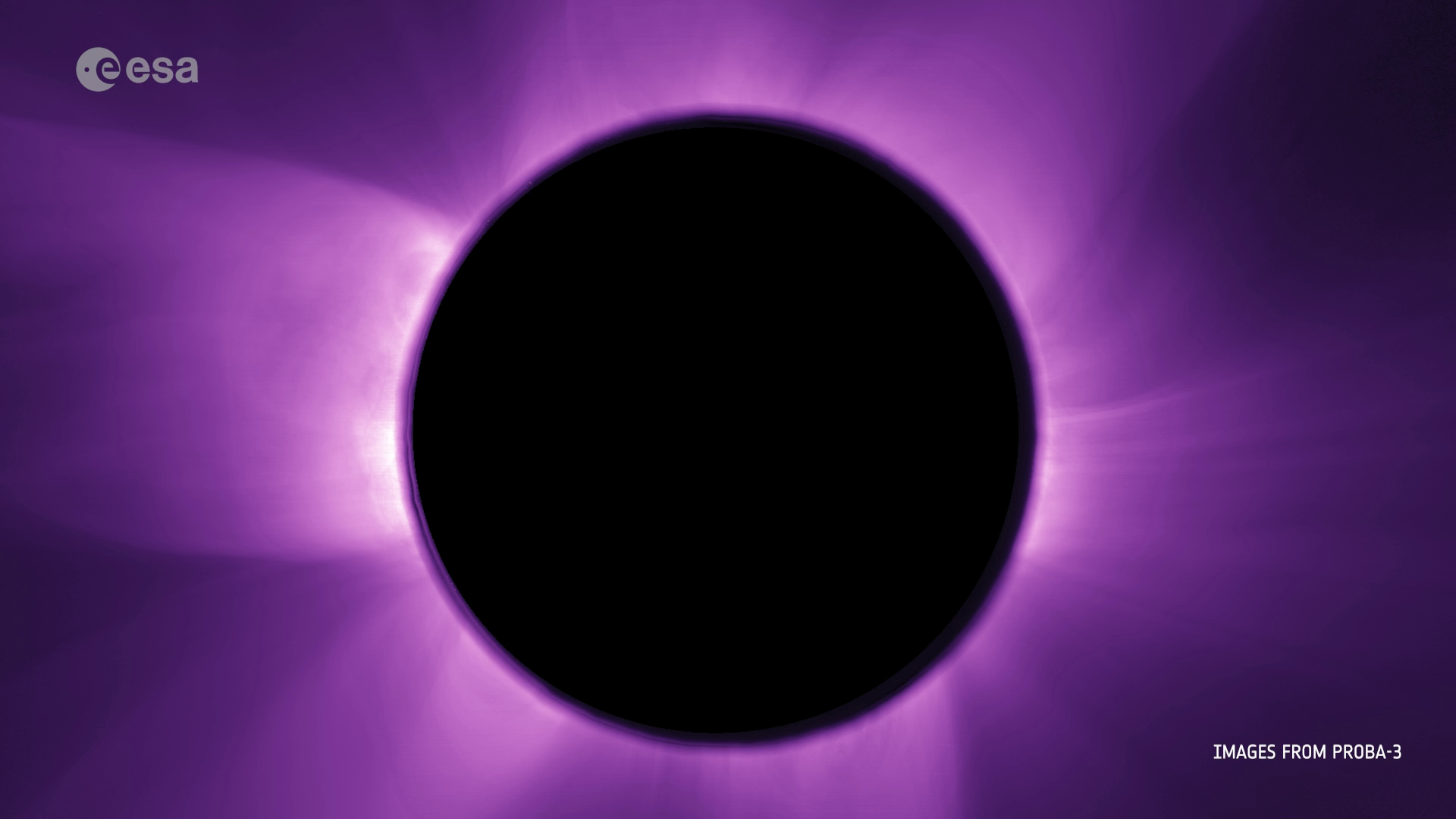
Since July 2025, the European Space Agency’s pair of Proba-3 satellites has already created 57 artificial solar eclipses. So far, the mission has collected more than 250 hours of high-resolution videos of the Sun’s atmosphere, called the corona. That’s the same amount of observing time as about 5000 total solar eclipse campaigns carried out on Earth. But the science is even more exciting. For the first time we can carefully track how material from the Sun moves through the inner corona, where sp
ESA
Government•Jun 16, 2025
Video: 00:01:40 Proba-3 artificially created what is normally a rare natural phenomenon: a total solar eclipse. In a world first, ESA’s Proba-3 satellites flew in perfect formation, blocking the Sun’s bright disc to reveal its fiery corona. This enigmatic outer layer burns millions of degrees hotter than the Sun’s surface and drives the solar storms that can disrupt life on Earth. With its first artificial eclipse, Proba-3 has captured detailed images of this mysterious region, offering scientis
ESA Space Engineering & Technology
Business•Jun 3, 2026
Kongsberg Satellite Services (KSAT) and Axelspace Corporation have announced an expanded strategic partnership aimed at accelerating the growth of Axelspace’s Earth observation business, AxelGlobe. The partnership is designed to enhance […]
SatNews

Business•May 21, 2026
Get a first look at Planet’s agentic geospatial AI. Learn how to query Earth data using natural language and generate automated reports.
Planet
Government•Apr 17, 2026
Scientists are working to understand exactly how these waves behave, and the team behind NASA’s Heliophysics Audified: Resonances in Plasmas (HARP) citizen science project approaches this in a unique way: they compare the Earth’s magnetic field to a giant harp in space.
NASA
Military & Defense•May 7, 2026
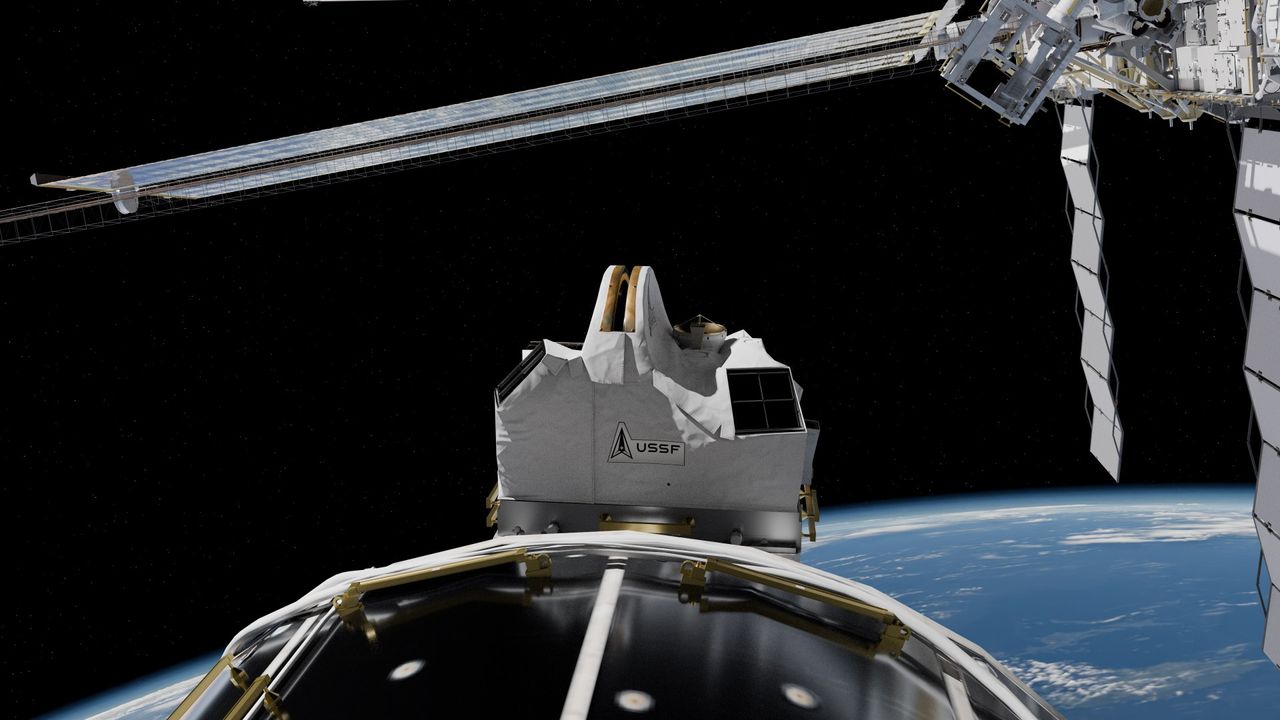
NASA, working with the Space Force, plans to launch a space weather mission later this month to study a strange "ring current" surrounding our planet.
Space.com
Business•Apr 16, 2026
COLORADO SPRINGS – Commercial satellite operator PlanetiQ will develop and launch spacecraft equipped with next-generation instruments to gather terrestrial and space weather data with a $15 million U.S. Air Force Strategic Funding Increase (STRATFI) contract announced April 16. The STRATFI agreement is “a big indication from the U.S. government that our technology matters and they […] The post PlanetiQ secures $15 million Air Force STRATFI contract appeared first on SpaceNews.
SpaceNews
Finance•May 8, 2026
AI is entering a different phase in Earth Observation. What began as experimentation on curated datasets is now moving into operational use, where models are expected to keep working across […] The post Operational AI is Hitting the Limits of Earth Observation Data appeared first on Via Satellite.
Via Satellite
Research•Mar 24, 2026
Image of the week: Global weather from space Craig MacDonald Tue, 24/03/2026 - 12:13 Image of the week: Global weather from space Watching our Earth from 36,000km This week’s image of the week is of the Earth as seen from the vantage point of geostationary weather satellites 36,000km above our planet. Last Updated Published on The composite image includes imagery from the geostationary satellites of EUMETSAT (Meteosat-9, -10, -11 and -12), the National Ocean and Atmospheric Administration (NOAA)
EUMETSAT
Government•Jul 15, 2025
Video: 00:07:25 Smile is a brand-new space mission currently in the making. It will study how Earth responds to the solar wind and solar storms. At the European Space Agency’s technical heart in the Netherlands, engineers have spent the last four months carrying out ‘spacecraft environment testing’ – putting Smile through its paces to make sure it is ready for the shaky rocket launch, the vacuum of space and the extreme temperatures it will face in orbit around Earth. Now all complete, Smile is
ESA

Business•May 28, 2026
Day 2 of SmallSat Europe 2026 was the day Earth observation's competitive frontier moved off the sensor and onto the tasking and integration layer.
SatNews
Business•Apr 15, 2026
NASA Science at NSTA Hyperwall Schedule, April 16-18, 2026 Join NASA in the Exhibit Hall (Booth #1265) for Hyperwall Storytelling by NASA experts. Full Hyperwall Agenda below. THURSDAY, APRIL 16 11:00 AMTeaching Space Weather in the Artemis Mission EraChristina Milotte11:15 AM5E StoryMaps using NASA ResourcesTina HarteBallinger11:30 AMGrowing Beyond Earth: A Partnership BetweenFairchild Tropical Botanic Garden […]
NASA
Research•May 26, 2026
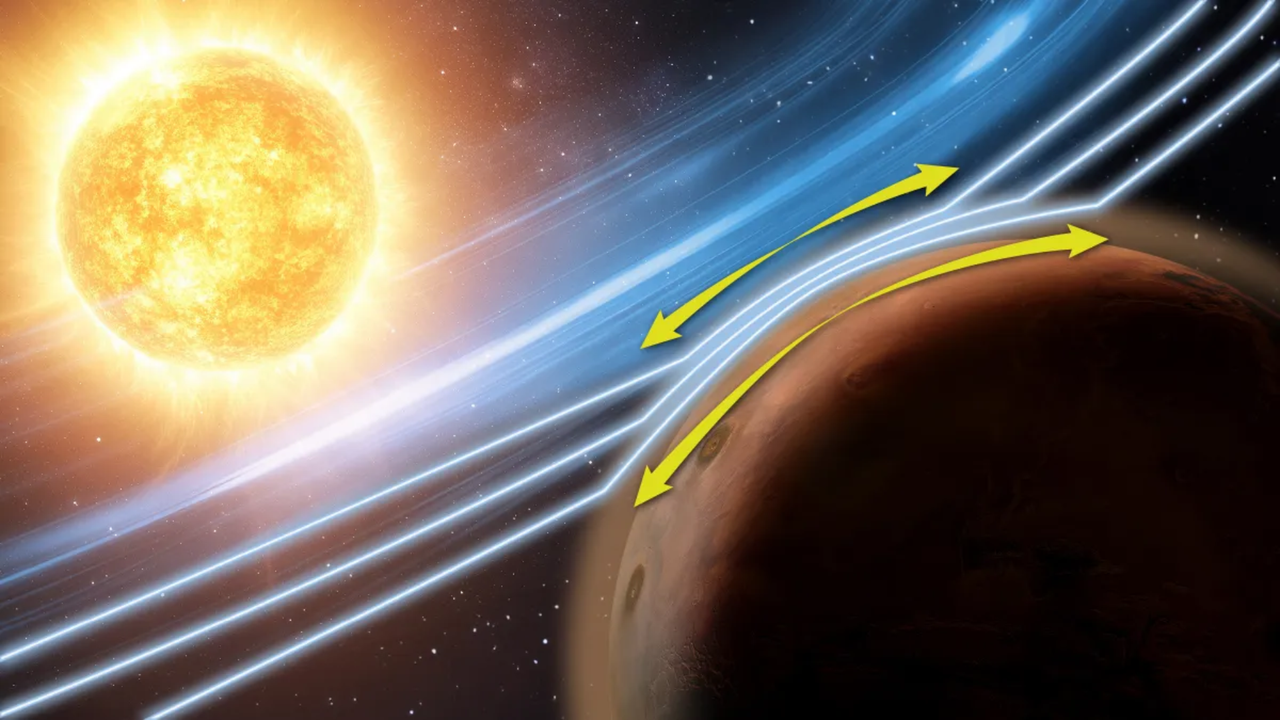
Data from NASA's MAVEN spacecraft revealed a never-before-seen atmospheric effect on Mars, revealing how solar storms may shape planets without strong magnetic fields.
Space.com